Throwing Good PR Punches in a Down Economy


There may not be such a thing as recession-proof PR, but there are ways to keep your design business strong and standing.

Here's my tips on toughening up those PR muscles in my latest post for the IIDA, "Throwing Good PR Punches in a Down Economy"

New Digital Lifestyle Magazine: Matchbook

There's a new girl in digi-town, and she shares her last piece of gum. That's the Matchbook Girl and persona behind the new online lifestyle magazine Matchbook which launched this month.  Tagged as the "the field guide to the charmed life," it's filled with fresh reports on home design, entertaining, travel, fashion and more. Check out the premiere issue here.

Photo: Lonny

7 Things You Should Know When Pitching Design Projects

If you're an architect or interior designer pitching your own design projects to the media, then here's a must read for you. My guest post for the International Interior Design Association (IIDA) blog, Design Matters, covers 7 things you should know


Take a look at how Michelle Wempe, IIDA, was featured in the San Francisco Chronicle for a project her firm Zumaooh completed in Sonoma’s Wine Country. 
.

The Good, The Bad & The Ugly Media Pitch

I received feedback from a freelance architecture writer last week; the kind I never get tired of hearing. It came along with a link to the published review he wrote on my client's book in The Architectural Review. Here's what he wrote:
".....you went about promoting this book in exactly the right way.......I find some publishers, even established ones, often still haven't got a clue.  Approaching freelance reviewers with special interests is the right way to get a review placed, I think - otherwise copies end up in unread piles on the magazine's office floor!"
If there's one pillar rule you should follow when pitching the media, it's personalize your pitches. I spent a lot of time researching writers I thought of pitching this book to. Although I don't operate otherwise, his note is a nice reminder that the time is well spent. 

Good pitches look like you've taken the time to care about the writer's needs and interests. Bad ones make you look clueless, and ugly ones get shared on the internet. 

See how this great pitch by the new Flipboard folks to highly regarded tech writer Robert Scoble earned a well deserved review by him, while this ugly one to The Marketing Spot blog struck out with an off-topic, painful-to-read pitch. 


Will Our Shelter Mag Survivors Reach The Rebound Finish Line?

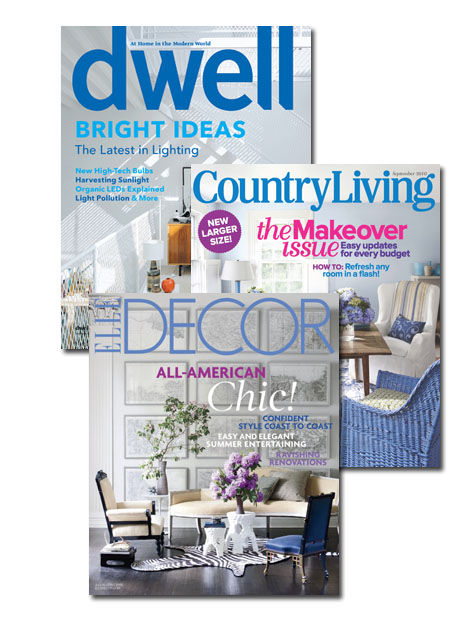
All eyes are on Elle Decor, Architectural Digest and House Beautiful as they move into the last quarter of the year with new Chiefs at their helms. It's a hopeful time for everyone who follows, reads, works in, with and loves  shelter magazines after chewing  so long on the tough threat of their demise during the "print is dead" era.

A recent article by Folio Magazine cautiously notes a rebound for the category is occurring, but  the most resilient media titles are those that take their brands beyond the printed page with live events, online communities, social media, etc. House Beautiful's Kitchen of Year Event in New York City helped the magazine bring in nearly 50% more ad pages for their annual issue over last year.

Smells like smart marketing to me.

I think Dwell's been the early adopter in this category, being one of the first to deliver their content online, while the rest of the category was slow in accepting that the world was changing.  (Architectural Digest, where have you been?) Let's hope these survivors will reach the rebound finish line better and stronger than when they started.  

Who do you think's done the best job at staying alive through the downturn?

Forward Thinking: New Tech Ideas for the Marketing Mind

The term "Tweetup" officially became a word this week when it was accepted into the Oxford Dictionary of English. It's not news. The way people are consuming their news has changed and is still evolving.  New technology tools are popping up to aggregate and deliver our content in better ways, and thought leaders are asking big questions like "How will the act of reading change as we move from print to pixels."   What will it look like, 5, 10, 20 years from now? Here's a few new tech ideas bouncing around the web for the marketing mind to think about: 


* Extra, Extra! The Twitter newspaper by paper.li is a new tool that organizes links shared on Twitter into an easy-t- read newspaper format; An interesting tool that can be used for marketing. See how @IntDesignChat made use of it this week to promote its weekly Twitter Chats. (pictured left) 


* What impact will the iPad have on your blog? Consider that, and plug into iPad peek to take a look. 

* There's an app. for that, and that, and that.... An article in Wired implies the web is dead as applications, aggregaters like Facebook and other things are taking over search-based browsers. It's gotten the techies sparring in some heated discussions. What will ultimately win in the war for our screen sucking attention? 


The Future of Kitchen Design Looks Surreally Green


The future of design looks green. That's the message being expressed in this spectacular kitchen sculpture by IKEA taking center stage at The Surreal House exhibition at the Barbican, London.  The sculpture depicts a surreal vision of the future, when environmental concerns will be at the core of kitchen design, The power of art is amazing, isn't it? 


Via DesignMilk. Thanks Jaime! 

Localize, Humanize & Socialize Your Way to Regional Media - A Special Post for DesignMatters

I'm excited to share my guest post for the International Interior Design Association's (IIDA) blog DesignMatters on getting regional media coverage. It's always nice to be invited as someone's guest,  and I'm honored to contribute to this respected organization's mission in helping and educating their members.   Be sure to stay tuned, as I'll be writing a special PR post for DesignMatters every month. 


It may be a big coup to be published in House Beautiful, but are you reaching the buyers in your backyard? Read more.

The Rich Are Ready to Spend on Their Homes

The wealthy are optimistic and ready to spend. That's the projection Bob Shullman, President of Ipsos Mendelsohn, shares in recent news interviews from the firm's latest affluent survey. According to their findings, more than 40% of the top affluent Americans plan to spend on their homes this year.

Will the upper crust lead us in a recovery? According to Mendelsohn, when they buy, they spend 3.8 times more than the mass market.

Wit Watch: Krug Takes People "Up, Up & Away" to Brand Experience

Brand experience is not a new idea, but seems to be a revisited topic these days as businesses are trying really hard to get people to spend money. Why? Because it's priceless. If you can give someone an experience through your product or service, then you've made what I call a lasting brand impression.  

Krug's Champagne Balloon Tour is full of everything but hot air. For about $77,790, you can ride their luxuriously designed hot air balloon with a wicker basket, canopy, burners by Camerons of Bristol, and white leather lining by French upholsters Bruno Domeau & Philippe Peres. Nice! The price is steep but  well worth it to the luxury consumer looking for the exclusive experience. 

You don't have have to have an uber-luxury budget to  provide an experience to your customers. Take your marketing mind outside conventional thought and find some inspiration in your own brand to develop a program that touches more than their bank account. 

Who's Leading the Print Pack? 20 Biggest Magazines So Far


Which magazine titles are touting the highest circulation numbers these days? Looks like food, gossip and women's lifestyle titles like Family Circle and Woman's Day are some claiming the most dollars from print readers.  Not surprised to find Better Homes & Gardens on the list with a healthy circulation of 7,644,011. See Huffington Post's report of the 20 Biggest Magazines of 2010 to see who's leading the print pack.

Designers & Architects Put Their Ears to the Computer Screen on Twitter


In a busy little world called Twitterville, there's a growing community of architects, designers, manufacturers and industry professional chatting with consumers and peers about everything from Fall trends to client relationships in 140 characters or less.

If you're regular on Twitter, then you may already know what Twitter Chats are. If not, the quick definition is: a conversation between Tweeters on a given topic held on Twitter at a scheduled time, which is identified by a hashtag (#nameofchat) that makes it easy to follow.

There are a lot of different Twitter Chats happening on Twitter on all sorts of topics, but over the course of the past year a few new chats  have emerged in the design and architecture industry and they're gaining a healthy following of active participants.

The American Institute of Architects (@aianational) hosts an #AIAChat the first Wednesday of every month for architects to discuss common issues and challenges. Their last chat caught 73 participants discussing the topic of client relationships. Two other design chats #IntDesignerChat and #IDzineChat were launched earlier this year and have claimed over 150 participants.  The first is geared for discussion among interior designers, while the latter is a live question and answer chat  between consumers and interior designers.

While studies are being released to show what Twitter fails to do for brands, they miss the whole point of what it does do very well; Connect people and provide  real-time market intelligence to businesses.  These Twitter Chats are helping design brands stay inspired and strategic through challenging and changing times by simply listening to what consumers and other businesses care about. Maybe you should check it out. 


Do you participate in any Twitter Chats? What have they done for you? 

Wit Watch: Dior's Chic Construction Cover-Up


Talk about brand presence!  Instead of boarding up their 57th Broadway store with the same old boarded eye-sore that permeates the streets of New York, Dior opted for a giant Lady Dior Bag as its cover up during their reconstruction. Your brand  may not be as big as Dior's but your vision can be.  Think about how you can take an ordinary part of your business and turn it into an extraordinary marketing move.

Photo: Retail Design Diva 

Trend Talk: Right-Sizing Homes & the PR Pitch

The idea of right-sizing a home isn't new to Gale Steves. In fact, the need to better design and build homes to "fit" a home owner's lifestyle was somewhat obvious to the former Editor in Chief of  Home Magazine and industry consultant when she saw the prevalence of over-sized homes and unused rooms back in the 80's. 

Her new book, Right Sizing Your Home: How to Make Your Home Fit Your Lifestyle gives voice to this trend and is gaining real traction with the media. Why? Priorities have changed for homeowners and buyers in the wake of this recession. Practicality, frugality and authenticity rule over big, beautiful and expensive and are influencing  buying decisions. Earlier this year, the New Economy Home captured the attention of the industry at the International Builder's Show for the same reason, giving the home building and real estate market a new major selling point -  affordable adaptability.  

"It's not about square footage anymore, but about how inventive a home is," says Gale. Her right-sized predictions for home design?  Master bathrooms will shrink, bedrooms will  downsize in favor of closets becoming dressing rooms, dining rooms will disappear and "eating rooms" in or off of  kitchens  will re-emerge. 

How can you take transform this national trend into a PR opportunity?  
  • Consumers and the media want solutions. Start pulling out stories about ways you saved clients or customers money and made their homes more efficient through your design services or products. 
  • Pitch a story to your local paper on how to transform an unused or outdated area into a functional spaces.  
  • Start walking the talk. It's important to sync your business with the changing marketplace. Speak at partner retailers or showrooms, or host events in your  store that address these topics. They're timely and give you more material for the media. 
While I haven't read Gale's book, I was impressed by the excerpts she provided me. She's outlined a realistic how-to approach with checklists and instructions anybody can follow, and included a lovely  "The Art of 'Re' " introduction that outlines 15 "re-" words to start creatively rightsizing. 


Now You Can Join the Legendary Glass House Conversations


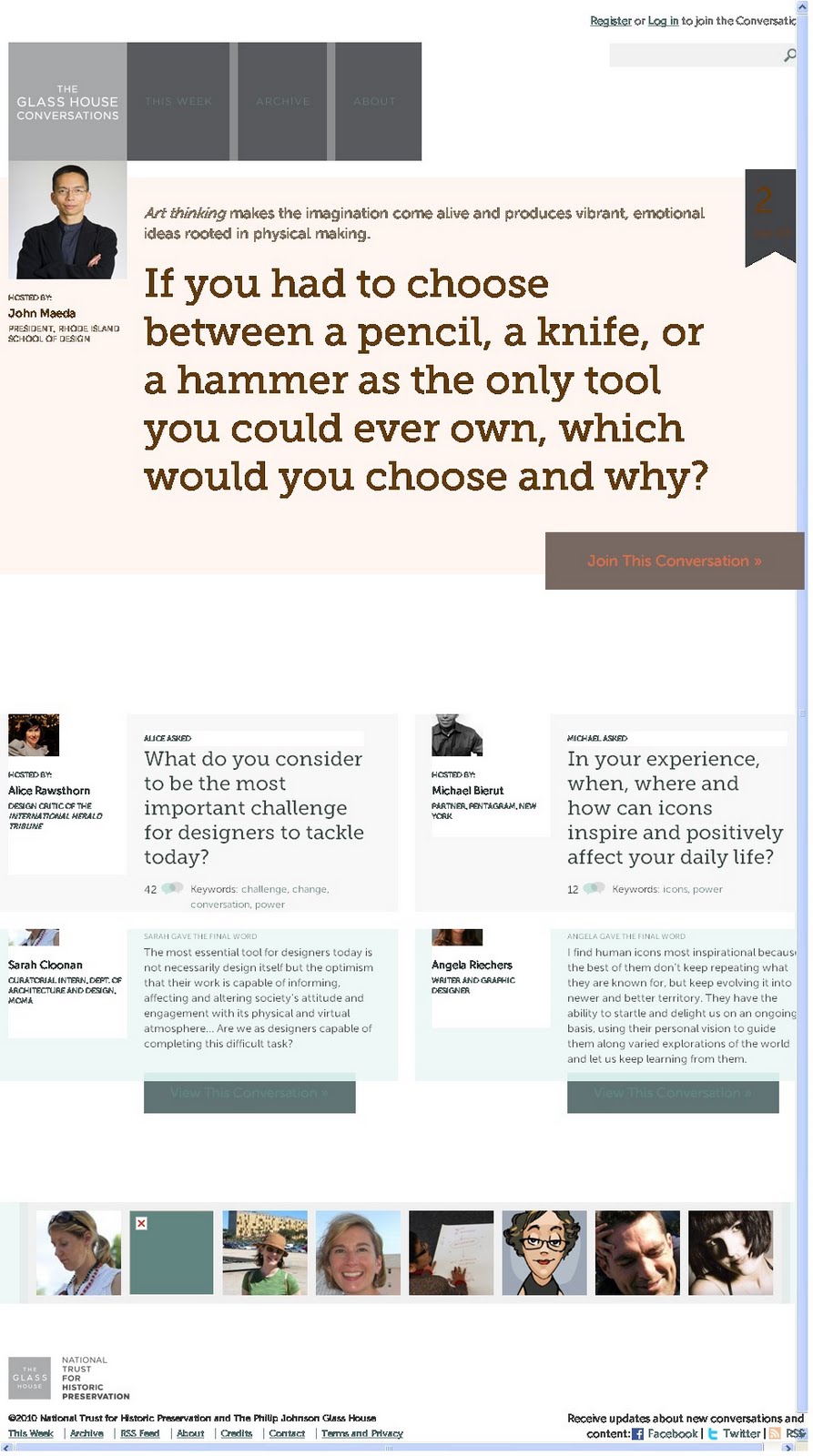
Now you can be one of the Glass House great minds. The legendary invitation-only Philip Johnson Glass House Conversations that brought together thought leaders in architecture, design and art  in the infamous New Canaan glass house is now open to the public, online of course.  Glass House Conversations is a website that continues the tradition, investigating what makes a great conversation in a regular, curated discussion sparked by provocative questions.

Each Monday, a host posts a question. People have only five days to respond, with conversations ending on Friday evenings. After comments have closed a “Final Word” is chosen from the replies. 

Now up: If you had to choose between a pencil, a knife or a hammer as the only tool you could ever own, which would you choose and why? There's two days left to give your answer on this one. Will you be the final word?   

This is a brilliant use of current technology and social trends  to communicate and assert  the Glass House as an influential force in design. How thought leading of them!  Applause.

What You Can Learn From Clinique's Poor PR Performance


Eeks. I always feel bad for anyone who gets any kind of bad PR practice "outing" in the media, like Clinique got from PRNewsers after putting a freelance trade reporter through hoops through their website.  The writer shares her full experience on her blog post "Tales from the Trade Press: Clinique's Press Office Hell."

Whether this was a case of neglect and badly outdated web interface with the media or an unnecessarily heavy-handed media relations response, the burning question is the same.  Why make it so hard?  We're not talking nuclear warhead decisions here! And, eh-ehm...its 2010. Technology has changed everything. 

Here's three tried and true principles this kind of bad PR performance can teach you: 

  • Never make it hard to be reached for media queries. There's no excuse not to be. Your website and blog should have a visible contact number or e-mail, and new affordable online newsrooms make it so easy to share  press releases, images and important facts about your business that make it easy for reporters to run with. 
  • Be responsive. Yes, it's tough keeping up, but in my book, responsiveness wins in the PR game and sticks with your reputation. 
  • Don't treat a freelance reporter or blogger, assistant editor or newbie  like he or she is second citizen. They're contribution to the news funnel is important and they may also land at some news outlet you'll be dying to be in.  Everyone deserves respect. Don't be a snob. 
Shame on Clinique. There's no reason a big lifestyle brand like this should have a problem answering a media query more quickly to personally discuss  the nature of the story and determine how best to give the writer her story. 

Bring Your Magazine Cover to Life with Your Smartphone


Augmented reality. That's what Time Out New York Kids Magazine is creating for their readers in their August issue as the first magazine using a technology that brings the cover to life with a multi-media component. Just shoot your smart phone at the cover to get a video. In this case, it's a video of  PS 22, the award-winning fifth-grade chorus from Staten Island. In today's game of trying to keep print titles in business, this technique is an inventive draw for readers and advertisers. Imagine what your favorite design or fashion magazine could do. 


What do you think? Would this influence your decision to purchase a magazine or newspaper? 


Buzz Kill: What Business Words Do You Love to Hate (and use)?

This post about the worst business buzz words used in 2010 is a great exclamation point to my recent post on writing press releases in which I advised to be vigilant against using cliches and "fluff" words that don't really mean anything.  Not surprisingly,  I regularly see and think about using the words that topped the list in meetings, releases, pitches, marketing copy and proposals.  I admit it. I love cliches. They're fun and so unbelievably on mark.  And in some cases, some of the overused buzzwords on this list, like synergy, are perfectly called for.  Some  personal yawners I work hard to not to overuse or use at all: innovative, synergy,  "hot" as in "season's hottest," strategic, "out of the box," and love as in "would love to."

Imagine if you're a reporter working with and reading words for a living? Do you want to be the rote pitch that crosses their desks? Break away from the expected. What buzz words are you tired of reading or try not to use?

Photo: The Risesmart Blog 

Press Release Pointers: Stop Romancing & Start Writing


I love writing press releases. The challenge of  synthesizing all the disparate facts and creating something that not only shares the news succinctly, but inspires and supports good stories and  brand positioning for my clients is exciting and rewarding.  Its not easy though. Crafting a press release should not be taken lightly, yet many businesses still churn out weak releases that fail to communicate key messages or are bogged down in fluff, buzz words and overstated phrases. Are you? Here's a few pointers to keep in mind the next time you write a press release:

Get to the Point Already
What are you talking about? If your title and first paragraph aren't telling me exactly what the rest of the release is going to be about, rewrite it. Think the good old  reporting pyramid. Write the most important facts up front first, and whittle from there.  And keep it relevant throughout. If you've got secondary, related news or a large amount of descriptive copy, consider a fact sheet or separate release.

What's Your Angle?
Without an angle, your press release will work like a misfired bullet likely to miss its target. An angle is what makes your news release matter to the media. You can develop different angles to suit each of the media you target, and you should.   Mine your story for the most relevant, compelling and interesting elements to lead with, always keeping in mind who you're pitching. A release for your regional magazine should highlight the local players, while one going to a niche magazine should speak to their editorial focus. My tip: Soak up a few articles from the media outlet you're pitching to get a feel for their tone and aim. Then go back to your release and rewrite it to suit their style and direction. 

Quote from the Heart, Edit with the Brain
Ditch the dry corporate speak like "we're excited to.." and challenge the tendency to just utter something that can just be stated in a factual sentence. Quotes are a great way to give life and movement to your press release. Think with your heart first. Then edit with your business brain. This is your place to say something with personality. Look to your your mission and positioning goals for guidance, and weave in something meaningful.

Stop the Gobbledygook
STOP using over used words like "innovative," cliches and  romantic language to describe your product or service.  These crimes are especially evident in the world of design, where style and aesthetic can be hard to communicate. Pretty adjectives should be monitored and tempered with real facts that give the readers a real picture. Keep the thesaurus and dictionary close to you.  Choose the perfect words to articulate your message, not the easy ones. You'll be more interesting and better understood.

Mind Your Business Messages
Yes, journalists really do use your press release when they write their stories. They rely on them for accuracy and ideas. So make it count. Aside from a calendar listing, a press release about news like your anniversary,  product announcement, or new business launch should be written with your brand position in mind. What are your key messages? What do you want to be known for? Can these be weaved into the angle, the title of your release, or used to create a great quote? It  may not be possible or relevant in every case, but the consistent, mindful communication of what your business stands for will stick in the minds of the media, and your audiences for the short and long haul. 

Was this helpful? Are there other challenges you've come across when writing press releases?

Good Old Fashioned Creativity from the ICFF Press Room


During her coverage of the ICFF, DesignMilk picked up some pretty clever press materials and shares some favorites in their post-round up report, including a really great business card by designer Ufuk Keskin which looks like his Sheetseat - a folding chair made from one piece of plywood. (below) One thing that's so much fun about doing PR for design and architecture businesses is that the creative element is always at play. I've had such fun exercising my creative bone plenty to design clever press and marketing pieces for clients. But over the past five years, those printed pieces have been replaced by digital disk and memory sticks more and more. Albeit economical and "cool" in its own right, it can't compare to the fantastic and memorable press kits (and branding)  created by good old fashioned printing and paper.


Photos: (top -bottom) Design Milk, Ufuk Keskin